
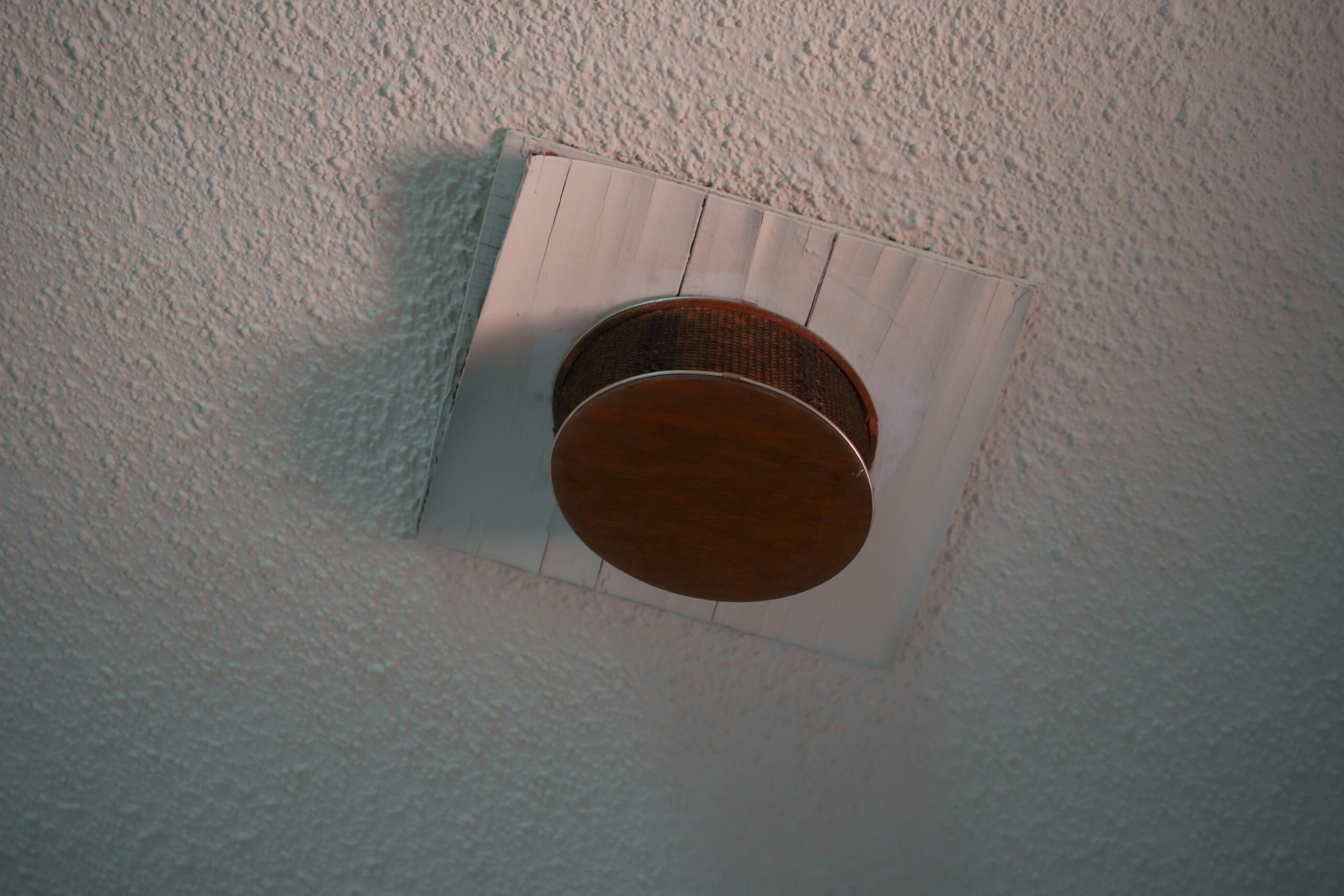
There’s a specific kind of frustration that comes from being woken up at 2 AM by a smoke detector chirping every 30 seconds. You stumble out of bed, grab a step stool, and then realize you don’t have the right battery. So you take the detector down to stop the noise, set it on the kitchen counter, and tell yourself you’ll deal with it tomorrow. Three weeks later, it’s still sitting there and you have no smoke protection in that room.
I’ve done exactly this more times than I’d like to admit. The chirping is annoying by design — it’s supposed to get your attention so you fix the problem. But most of us treat it as a nuisance instead of what it actually is: a safety device telling you it can’t do its job.
Changing a smoke detector battery is one of the simplest home maintenance tasks there is. It takes about five minutes and requires no tools. But doing it safely and correctly matters, because a smoke detector with a dead battery might as well not exist.
This guide covers everything you need to know about changing your smoke detector battery, including which type to buy, how to reach ceiling-mounted detectors safely, and how to stop that chirping for good.
Why Smoke Detector Batteries Matter
Smoke detectors save lives. According to the National Fire Protection Association, the risk of dying in a home fire is cut in half in homes with working smoke alarms. The keyword there is “working.”
Common reasons smoke detectors fail:
- Dead or missing batteries — The number one reason. A detector without a working battery cannot alert you.
- Disconnected batteries — People remove batteries to stop chirping or cooking alarms and forget to put them back.
- Expired detectors — Smoke detectors have a lifespan of about 10 years. After that, the sensors degrade and may not detect smoke reliably.
- Improper placement — Detectors installed too close to cooking appliances or in dead air spaces may not function correctly.
A chirping smoke detector is not just annoying. It’s telling you that its battery is low and it may not be able to alert you in a real emergency. Don’t ignore it.
What Type of Battery Does Your Smoke Detector Use?
Before you do anything, figure out what battery your detector needs. There are three common types:
9-Volt Batteries
The most common type in older smoke detectors. The battery snaps into a clip on the back of the detector. If your detector has a removable battery door on the side or back, it probably uses a 9-volt.
AA Batteries
Some newer detectors use two or three AA batteries instead of a 9-volt. These tend to last longer and are easier to find in stores.
Sealed 10-Year Lithium Batteries
Many smoke detectors manufactured after 2015 have a sealed lithium battery designed to last the entire 10-year life of the detector. These batteries cannot be replaced. When the battery dies, you replace the entire detector.
If your detector is chirping and has a sealed battery, the detector itself has reached the end of its life and needs to be replaced entirely.
How to Tell Which Type You Have
Take the detector down and look at the back. There should be a label indicating the battery type. If there’s a battery compartment door, open it to see what’s inside. If there’s no battery door and the label mentions a sealed battery or 10-year life, you have a sealed unit.
Step-by-Step: How to Change the Battery
Step 1: Get the Right Battery
Check what type you need before you start. Nothing is more frustrating than getting the detector down and realizing you bought the wrong battery. Buy name-brand batteries — they last longer and are more reliable than cheap alternatives.
Step 2: Get a Safe Way to Reach the Detector
Most smoke detectors are mounted on the ceiling or high on a wall. Do not stand on a chair, a counter, or the edge of a bed to reach it. These are unstable and can cause a fall.
Use a step stool or a sturdy ladder. Make sure it’s on a flat, dry surface and that it’s fully opened and locked in place. If someone is available to hold the ladder, even better.
If your ceiling is too high for a standard step ladder, consider buying a telescoping reach tool designed for smoke detectors. These let you twist the detector off the mounting bracket from the floor without climbing.
Step 3: Remove the Detector from the Mounting Bracket
Smoke detectors typically attach to a mounting bracket on the ceiling with a twist-lock mechanism. Turn the detector counterclockwise (usually about a quarter turn) and it will detach from the bracket.
Don’t pull straight down — twist first. The bracket stays attached to the ceiling and the detector comes away in your hand.
If it’s hardwired (connected to your home’s electrical system), there will also be a plug connecting the detector to the wiring. Gently pull this plug apart to disconnect it. Don’t cut any wires.
Step 4: Open the Battery Compartment
On most detectors, the battery compartment is on the back or side. It usually has a small door that slides open or pops off. Some models require you to press a tab to release the door.
Step 5: Remove the Old Battery
For 9-volt batteries, gently pull the battery clip off the battery terminals. Don’t yank the wires — grip the plastic connector and pull it straight off.
For AA batteries, note which direction the batteries are oriented before removing them. The + and – markings inside the compartment show the correct direction.
Step 6: Install the New Battery
Snap the 9-volt battery onto the clip, making sure the positive and negative terminals align correctly. The clip only fits one way — if it doesn’t snap on easily, you probably have it backwards.
For AA batteries, insert them following the + and – markings in the compartment.
Step 7: Close the Battery Compartment
Make sure the battery door closes fully. Some detectors won’t mount back onto the bracket if the battery door is open — this is a safety feature to prevent you from installing it without a battery.
Step 8: Test the Detector
Before you put it back on the ceiling, press and hold the test button for a few seconds. The alarm should sound loudly. If it doesn’t, the battery may not be installed correctly or the detector itself may be faulty.
Step 9: Reattach the Detector to the Bracket
If it’s hardwired, plug the wiring connector back in first. Then align the detector with the mounting bracket and turn it clockwise until it locks into place.
Step 10: Test It Again
Press the test button one more time after it’s mounted to make sure everything is connected properly and the alarm sounds from its installed position.
Hardwired vs. Battery-Operated Detectors
It’s worth understanding the difference because it affects how you maintain them.
Battery-Operated
These run entirely on batteries. When the battery dies, the detector stops working. Simple and straightforward. Change the battery once a year or when it starts chirping.
Hardwired
These are connected to your home’s electrical system and also have a backup battery. The backup battery keeps the detector working during power outages. When the backup battery dies, the detector chirps even though it’s still getting power from the house wiring.
Hardwired detectors still need their backup batteries replaced regularly. The process is the same — remove the detector, change the battery, and reattach it.
Hardwired detectors are also interconnected — when one alarm goes off, all the alarms in the house sound. This provides better warning in larger homes but means you need to identify which specific detector is chirping (it’s usually the one with the flashing LED light).
How to Stop the Chirping
If your smoke detector is chirping and you’re not ready to change the battery right now, here’s what you need to know:
Why It Chirps
The chirp (usually one short beep every 30 to 60 seconds) indicates a low battery. It’s designed to be annoying enough that you can’t ignore it. Some detectors also chirp when they’ve reached the end of their life.
Temporary Fixes That Don’t Work Well
- Removing the battery — This stops the chirping but leaves you with no protection. Don’t do this.
- Taking the detector down — Same problem. No detector means no warning.
- Covering the detector — This blocks the sensor and prevents it from detecting smoke.
The Only Real Fix
Change the battery. That’s it. There’s no shortcut. The chirping is telling you the battery is low, and the only solution is a new battery.
If you’ve changed the battery and it’s still chirping, try these troubleshooting steps:
- Make sure the battery is installed correctly (check the + and – alignment)
- Make sure the battery door is closed completely
- Clean the detector with compressed air or a soft brush — dust can cause false chirps
- If the detector is more than 10 years old, replace it entirely
How Often Should You Change the Battery?
The general recommendations:
| Battery Type | Replacement Frequency |
|---|---|
| 9-volt | Once a year |
| AA | Once a year |
| Sealed lithium | Never — replace the entire detector every 10 years |
An easy way to remember: change your smoke detector batteries when you change your clocks for daylight saving time in the spring and fall. Even if the battery isn’t dead yet, replacing it on a schedule ensures it never runs out unexpectedly.
If your detector starts chirping before the year is up, change the battery immediately. The chirp means the battery is low enough that the detector may not function reliably in an emergency.
Where Should Smoke Detectors Be Installed?
If you’re checking your detectors, it’s worth making sure you have enough of them in the right places.
Current recommendations from the NFPA:
- Inside every bedroom — Or outside each sleeping area if bedrooms share a hallway
- On every level of the home — Including the basement
- In hallways — Especially those leading to bedrooms
- In the living room — Or any main gathering area
- At least 10 feet from cooking appliances — To reduce false alarms from cooking
Places to avoid:
- Near bathrooms — Steam can cause false alarms
- Near air vents or fans — Airflow can prevent smoke from reaching the detector
- In garages — Car exhaust and temperature extremes cause false alarms and degrade the sensor
- In unfinished attics — Temperature extremes affect performance
When to Replace the Entire Smoke Detector
Smoke detectors don’t last forever. The sensors inside degrade over time, and after about 10 years, they may not detect smoke reliably even if the battery is fresh.
How to Check the Age
Look at the back of the detector for a manufacture date. If there’s no date, there may be a code — check the manufacturer’s website to decode it. If you can’t find any date and you’ve lived in the home for more than 10 years, assume the detector needs replacing.
Signs It’s Time to Replace
- It’s more than 10 years old
- It chirps even after a new battery is installed
- The test button doesn’t produce a loud alarm
- The casing is yellowed, cracked, or damaged
- It goes off frequently for no reason
When replacing a detector, buy one with a sealed 10-year lithium battery if possible. You’ll never have to change the battery — just replace the whole unit when it expires.
Carbon Monoxide Detectors
If your home has fuel-burning appliances (gas furnace, water heater, fireplace, attached garage), you also need carbon monoxide detectors. CO is odorless and invisible, and it kills hundreds of people each year.
Many smoke detectors now include CO detection in a single unit. If yours doesn’t, install separate CO detectors on every level of the home and near sleeping areas.
CO detectors also have a lifespan of about 5 to 7 years and will chirp when they need replacement. The battery replacement process is the same as smoke detectors.
Frequently Asked Questions
Why does my smoke detector chirp at night?
Smoke detectors often chirp at night because the battery voltage drops slightly in cooler temperatures. Homes are typically cooler at night, which can push a borderline-low battery below the threshold that triggers the chirp. If it’s chirping at night, the battery is low and needs to be replaced.
Can I use rechargeable batteries in my smoke detector?
It’s not recommended. Rechargeable batteries have a different voltage discharge curve than alkaline batteries. They may drop voltage suddenly rather than gradually, which means the low-battery chirp might not warn you before the detector stops working. Use standard alkaline batteries unless the manufacturer specifically approves rechargeable ones.
Why does my hardwired smoke detector chirp if it’s connected to electricity?
The backup battery is low. Hardwired detectors have a battery backup that keeps them working during power outages. When this battery dies, the detector chirps even though it’s still receiving power from your home’s electrical system. Change the backup battery the same way you would on a battery-operated detector.
How do I know which detector is chirping when they’re all hardwired?
Interconnected hardwired detectors all look similar, which makes it hard to tell which one is chirping. Look for the detector with a flashing LED light — the chirping unit usually has a light that flashes in a different pattern than the others. You can also try pressing the test button on each one; the chirping unit may respond differently.
What do I do with old smoke detectors?
Most smoke detectors can be thrown in the regular trash, but check your local regulations first. Some areas require special disposal because older detectors contain small amounts of radioactive material (ionization detectors). If your detector has a radioactive symbol on the back, check with your local waste management for proper disposal instructions. Photoelectric detectors do not contain radioactive material.