
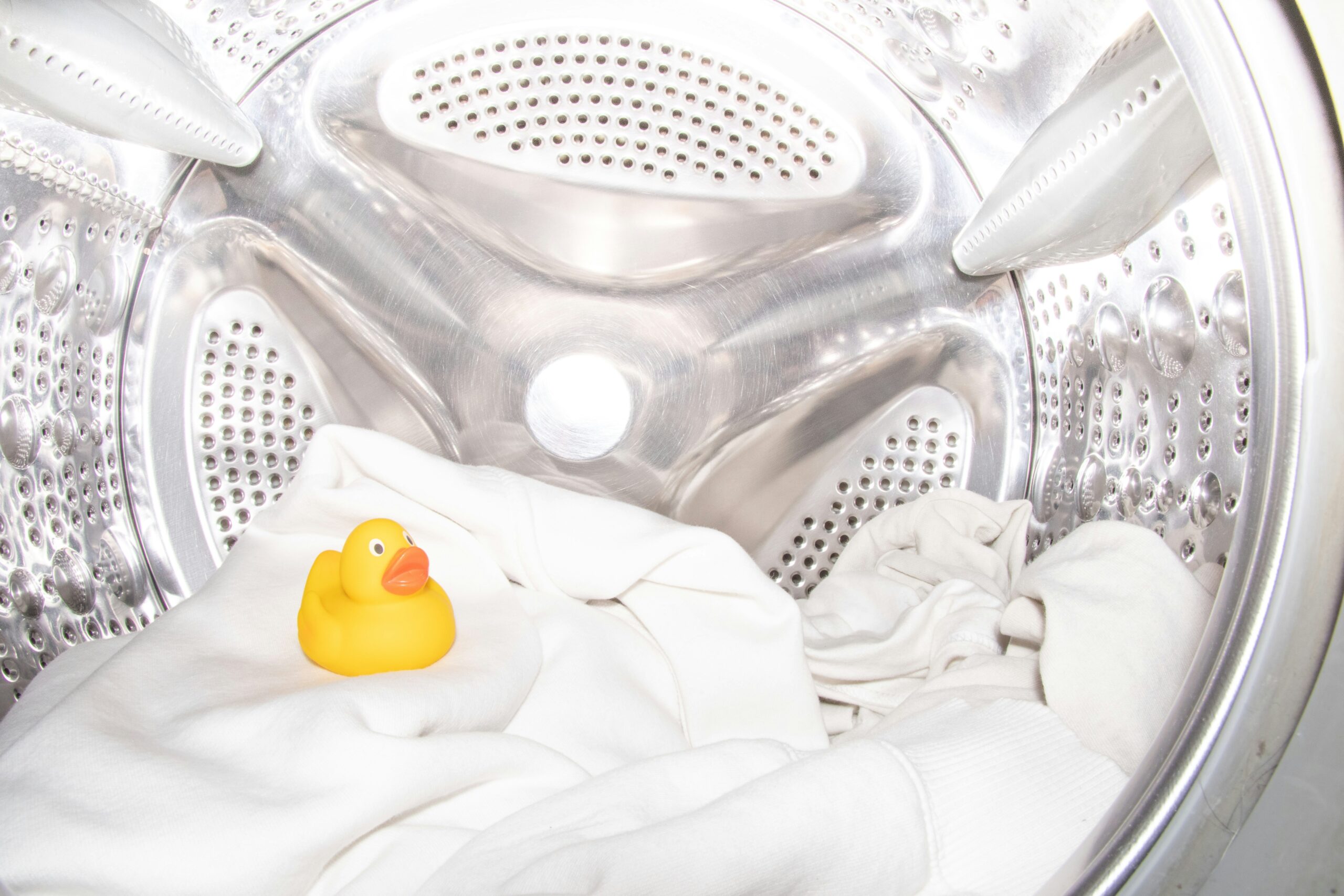
Washing machines are supposed to clean things. So it seems counterintuitive that the machine itself needs to be cleaned. But it does. And if you’ve ever pulled a load of laundry out and noticed a sour, musty smell — or worse, black spots on your clothes — you’ve experienced what happens when you don’t clean your washing machine.
I went years without cleaning my washing machine. I assumed the soap and water that ran through it during each cycle kept it clean. Then one day, I noticed a faint sour smell on my towels. I rewashed them, but the smell came back. I checked the washing machine and found a nasty surprise — a ring of grime around the top of the drum, a slimy rubber gasket, and a lint filter that looked like a small animal had taken up residence.
Washing machines accumulate dirt, detergent residue, fabric softener buildup, and minerals from hard water. Over time, this creates an environment where mold and mildew thrive — especially in front-loading machines that use less water and have rubber door gaskets that stay damp.
Cleaning your washing machine isn’t complicated or time-consuming, but it does require more than just running an empty cycle. This guide covers how to clean both top-loading and front-loading machines, how to maintain them to prevent problems, and how to troubleshoot common issues.
How Often Should You Clean Your Washing Machine?
| Task | Frequency |
|---|---|
| Wipe down the door and gasket | After every use (front loaders) |
| Leave the door open to dry | After every use |
| Clean the detergent dispenser | Monthly |
| Run a cleaning cycle | Monthly |
| Clean the filter | Every 3-6 months |
| Clean behind and under the machine | Every 6 months |
| Check hoses for damage | Every 6 months |
How to Clean a Top-Loading Washing Machine
Top-loading machines are easier to clean because they don’t have the rubber door gasket that front-loaders do. The main areas to clean are the drum, the agitator (if you have one), the dispenser, and the filter.
Step 1: Run a Cleaning Cycle with Vinegar
Vinegar is a natural disinfectant and descaler that removes mineral deposits, detergent residue, and mold.
- Set the machine to the hottest water setting and the largest load size.
- Add 2 to 4 cups of white vinegar to the drum as it fills with water. (Don’t add any detergent or clothes.)
- Let the machine run through a complete cycle.
- If your machine has an extra rinse option, use it to flush out any remaining vinegar.
If your machine has a “Clean Washer” or “Self Clean” cycle, use that instead of the regular cycle. These cycles are designed to clean the drum and are usually longer and hotter than a normal wash.
Step 2: Clean the Agitator or Drum
After the vinegar cycle, check the agitator (the tall post in the center of the drum) or the drum itself for any remaining grime.
- Mix a solution of 1/4 cup vinegar and 1 quart warm water.
- Dip a microfiber cloth or sponge in the solution and wipe down the inside of the drum, the agitator, and the top rim of the drum.
- Pay attention to any areas with visible grime or stains.
- For stubborn stains, make a paste of baking soda and water and scrub with a sponge.
Step 3: Clean the Detergent Dispenser
Detergent and fabric softener can build up in the dispenser, creating a gunky residue that can clog the dispenser and prevent detergent from dispensing properly.
- Remove the dispenser drawer if possible. Most pull straight out or have a release button.
- Soak the drawer in hot water and vinegar for 15 to 30 minutes.
- Scrub with an old toothbrush to remove residue from the compartments and the siphon tubes.
- Rinse thoroughly and dry.
- Wipe the dispenser cavity in the machine with a cloth and vinegar solution.
Step 4: Clean the Lint Filter
Not all top-loading machines have a lint filter, but many do. Check your owner’s manual for the location.
- Locate the filter. It may be in the center agitator tube, on the rim of the drum, or near the water pump.
- Remove the filter and clean out any lint, hair, and debris.
- Rinse the filter under running water.
- Reinstall the filter.
If you can’t find a lint filter, your machine may have a self-cleaning filter that doesn’t require maintenance.
Step 5: Clean the Exterior
- Wipe down the exterior of the machine with a damp cloth and mild soap.
- Pay attention to the control panel and knobs — they can accumulate detergent splashes and grime.
- Dry with a clean cloth.
How to Clean a Front-Loading Washing Machine
Front-loading machines require more attention than top-loaders because they have a rubber door gasket (boot) that traps moisture and debris. This gasket is the most common source of mold and mildew problems.
Step 1: Clean the Door Gasket
This is the most important step for front-loading machines.
- Open the door and examine the rubber gasket. Look for mold, mildew, hair, coins, and other debris.
- Pull back the fold of the gasket to expose the inner surface. This is where the worst buildup occurs.
- Use a cloth or sponge soaked in a vinegar and water solution (1:1 ratio) to wipe down all surfaces of the gasket — inside and out.
- For stubborn mold, use a solution of 1 part bleach to 10 parts water. Apply it to the moldy areas, let it sit for 5 to 10 minutes, then wipe clean.
- Dry the gasket with a towel.
Caution: Never mix bleach and vinegar — it produces toxic chlorine gas. Use one or the other, not both, and rinse thoroughly between uses.
Step 2: Run a Cleaning Cycle with Vinegar
- Set the machine to the hottest water setting and the longest cycle.
- Pour 2 cups of white vinegar into the detergent dispenser.
- Run the machine through a complete cycle with no clothes.
If your machine has a “Clean Washer” or “Self Clean” cycle, use that.
Step 3: Clean the Detergent Dispenser
Same as for top-loading machines — remove the drawer, soak in vinegar and water, scrub with a toothbrush, rinse, and dry.
Step 4: Clean the Drain Pump Filter
Most front-loading machines have a drain pump filter (also called a coin trap) that catches small items before they enter the pump. This filter needs to be cleaned regularly.
- Locate the filter. It’s usually behind a small access panel at the bottom front of the machine.
- Place a towel and a shallow pan under the filter to catch water.
- Open the filter cover and slowly unscrew the filter cap. Water will drain out — this is normal.
- Remove the filter and clean out any lint, coins, hair, and debris.
- Rinse the filter under running water.
- Reinstall the filter and close the cover.
Do this every 3 to 6 months, or more often if you notice the machine draining slowly.
Step 5: Clean the Glass Door
The inside of the glass door can accumulate water spots and detergent residue.
- Spray the glass with a vinegar and water solution.
- Wipe clean with a microfiber cloth.
- Dry with a clean cloth.
Step 6: Clean the Exterior
Wipe down the exterior with a damp cloth and mild soap. Dry with a clean cloth.
How to Clean a Washing Machine with Baking Soda and Vinegar
The baking soda and vinegar method is a popular natural cleaning method. The baking soda acts as a mild abrasive and deodorizer, while the vinegar disinfects and removes mineral deposits.
For Top-Loading Machines
- Set the machine to the hottest water setting and the largest load size.
- Add 4 cups of white vinegar to the drum as it fills.
- Let the machine agitate for a minute to mix the vinegar and water, then pause the cycle and let it sit for 30 minutes to an hour.
- Resume the cycle and let it run through to completion.
- Run a second cycle with 1 cup of baking soda added to the drum.
- Wipe down the drum, dispenser, and exterior.
For Front-Loading Machines
- Pour 2 cups of vinegar into the detergent dispenser.
- Add 1/4 cup of baking soda directly to the drum.
- Set the machine to the hottest water setting and the longest cycle.
- Run the machine through a complete cycle.
- Wipe down the gasket, door, dispenser, and exterior.
How to Prevent Washing Machine Odors
The best way to deal with washing machine odors is to prevent them from developing in the first place.
Leave the Door Open
This is the single most important thing you can do. After every load, leave the door (and the detergent dispenser) open to allow the interior to dry out. Mold and mildew thrive in damp, dark environments. Letting the machine air out prevents them from taking hold.
For front-loaders, leave the door wide open when not in use. For top-loaders, prop the lid open.
Don’t Use Too Much Detergent
More detergent doesn’t mean cleaner clothes. In fact, using too much detergent leaves residue in the machine and on your clothes. This residue builds up over time and creates a food source for mold and bacteria.
Use the amount of detergent recommended on the bottle — or less. Most people use twice as much detergent as they need. If you have a high-efficiency (HE) machine, use HE detergent and follow the HE recommendations.
Don’t Use Fabric Softener
Fabric softener leaves a waxy residue on clothes and in the washing machine. Over time, this residue builds up and creates a sticky film that traps odor-causing bacteria.
Use white vinegar instead of fabric softener. It softens clothes, reduces static, and doesn’t leave residue. Add 1/2 cup to the fabric softener dispenser.
Remove Wet Clothes Promptly
Don’t leave wet clothes sitting in the machine for hours. Set a timer or reminder to move clothes to the dryer as soon as the cycle ends.
If you forget and clothes sit for more than a few hours, rewash them. The sour smell that develops is from bacteria growing in the damp environment.
Clean the Gasket Regularly
For front-loading machines, wipe down the rubber gasket after every few loads. Check for debris and remove it. This takes about 30 seconds and prevents the worst mold problems.
Washing Machine Maintenance Checklist
Beyond cleaning, there are a few maintenance tasks that keep your washing machine running well.
Check the Hoses
Washing machine hoses can burst, causing significant water damage. Check them every 6 months for:
- Bulges or blisters
- Cracks or fraying
- Leaks at the connections
- Stiffness or brittleness
If you see any of these signs, replace the hoses immediately. Most experts recommend replacing washing machine hoses every 3 to 5 years, regardless of their condition.
Consider upgrading to stainless steel braided hoses. They’re more durable and less likely to burst than rubber hoses. They cost about $15 to $25 each — a small price to pay to prevent a flood.
Level the Machine
A washing machine that isn’t level will vibrate excessively, walk across the floor, and potentially damage the floor or the machine.
- Place a level on top of the machine.
- Check side-to-side and front-to-back.
- Adjust the feet by turning them clockwise to shorten or counterclockwise to lengthen.
- Recheck with the level.
- Lock the feet in place with the lock nuts (if your machine has them).
Don’t Overload the Machine
Overloading puts extra strain on the motor, transmission, and suspension. It also prevents clothes from getting clean because there isn’t enough room for them to move.
A good rule of thumb: fill the drum no more than 3/4 full. Clothes should have room to tumble freely.
Use the Right Detergent
If you have a high-efficiency (HE) machine, use HE detergent. Regular detergent creates too many suds, which can damage the machine and leave residue. HE detergent is formulated to clean with less water and fewer suds.
Look for the HE symbol on the detergent bottle.
Common Washing Machine Problems and Solutions
Problem: Washing Machine Smells Bad
Causes: Mold and mildew buildup, detergent residue, leaving the door closed between uses.
Solutions:
- Clean the machine with vinegar and baking soda
- Clean the door gasket (front loaders)
- Leave the door open between uses
- Reduce detergent usage
- Switch from fabric softener to vinegar
Problem: Clothes Come Out with Spots or Stains
Causes: Detergent or fabric softener residue, dirty dispenser, rust in the water supply.
Solutions:
- Clean the detergent dispenser
- Run a cleaning cycle with vinegar
- Use less detergent
- Check for rust in the water (if you see rust-colored spots)
- Don’t overload the machine
Problem: Machine Doesn’t Drain Properly
Causes: Clogged drain pump filter, kinked drain hose, clogged standpipe.
Solutions:
- Clean the drain pump filter
- Check the drain hose for kinks
- Make sure the drain hose isn’t pushed too far into the standpipe
Problem: Machine Vibrates Excessively
Causes: Machine not level, overloaded, shipping bolts not removed (new machines).
Solutions:
- Level the machine
- Reduce the load size
- Check that shipping bolts were removed (these are installed for transport and must be removed before use)
Problem: Water Leaks from the Door (Front Loaders)
Causes: Damaged door gasket, debris caught in the gasket, door not closing properly.
Solutions:
- Inspect the gasket for damage and replace if needed
- Clean the gasket and check for debris
- Make sure the door closes and latches properly
How Much Does Washing Machine Maintenance Cost?
| Task | DIY Cost | Professional Cost |
|---|---|---|
| Cleaning supplies (vinegar, baking soda) | $5 – $10 | N/A |
| Replace hoses (stainless steel) | $30 – $50 | 100 – \200 |
| Replace door gasket | $50 – $100 | 150 – \300 |
| Replace drain pump | $50 – $150 | 200 – \400 |
Most washing machine maintenance is free or very inexpensive. The biggest potential cost is ignoring problems until they cause damage — a burst hose can cause thousands of dollars in water damage.
Frequently Asked Questions
Can I use bleach to clean my washing machine?
Yes, but use it carefully. Bleach is effective at killing mold and mildew but can damage rubber gaskets over time and produces toxic fumes if mixed with vinegar. If you use bleach, use it alone (not with vinegar), dilute it properly (1/2 cup per full load), and run an extra rinse cycle to flush it out. Vinegar is a safer, gentler alternative for regular cleaning.
Why does my front-loading washing machine smell worse than my old top-loader?
Front-loading machines use less water and have a rubber door gasket that traps moisture. The low water usage means detergent and dirt aren’t flushed away as thoroughly, and the damp gasket provides an ideal environment for mold and mildew. Regular cleaning and leaving the door open between uses prevents most odor problems.
How much vinegar should I use to clean my washing machine?
For top-loading machines: 2 to 4 cups per cleaning cycle. For front-loading machines: 2 cups per cleaning cycle. Pour the vinegar directly into the drum (top loaders) or into the detergent dispenser (front loaders).
Can I use washing machine cleaning tablets instead of vinegar?
Yes. Products like Affresh washing machine cleaner are designed to clean washing machines and are effective. They’re more expensive than vinegar (about $5 to $10 per tablet) but convenient. Follow the instructions on the package.
How do I know if my washing machine hoses need replacing?
Check hoses every 6 months for bulges, cracks, fraying, or leaks. Replace them immediately if you see any of these signs. Even if they look fine, replace rubber hoses every 3 to 5 years. Stainless steel braided hoses last longer but should still be checked regularly.