
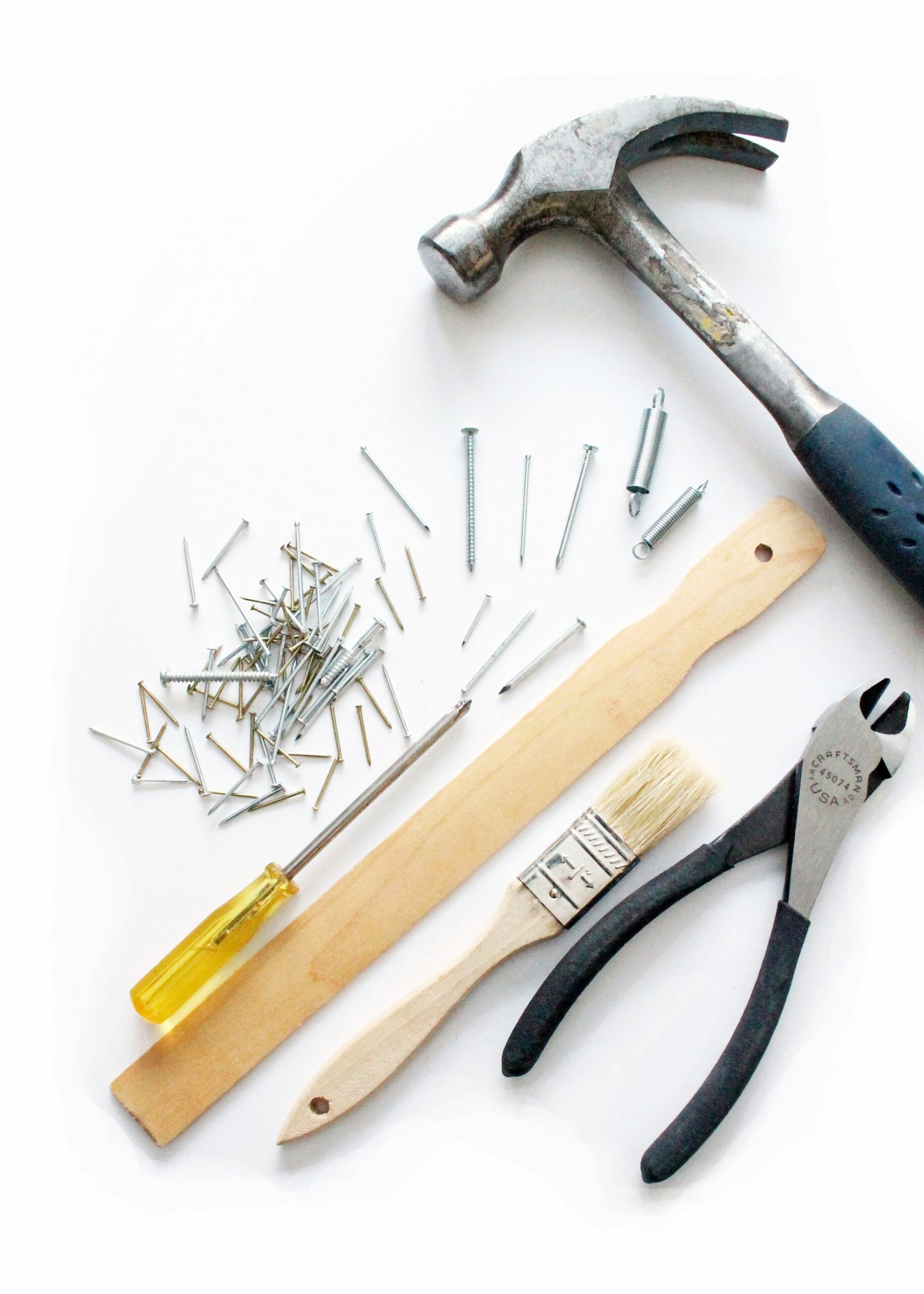
When I moved into my first place, my entire tool collection consisted of a hammer I found in the garage and a flathead screwdriver from a dollar store. That was it. I figured I’d just borrow whatever else I needed or call someone when things broke.
That plan fell apart pretty quickly. The first week, a shelf came loose and I had nothing to reattach it. A few weeks later, my bathroom drain slowed to a crawl and I didn’t own a plunger. I ended up spending way too much money on a plumber for something I could have fixed myself in five minutes.
You don’t need a workshop full of expensive power tools to take care of a home. But you do need a basic set of hand tools that can handle the majority of small repairs and maintenance tasks you’ll run into. This guide covers the essentials — nothing fancy, nothing overpriced, just the tools that will actually get used.
Why You Need Your Own Tools
Relying on borrowed tools means you’re always at someone else’s mercy. And calling a professional for every little thing gets expensive fast. A basic service call from a handyman or plumber typically starts at $75 to $150 just for showing up, before any actual work is done.
Having your own tools means you can:
- Fix small problems immediately instead of waiting
- Save money on simple repairs
- Handle regular maintenance tasks confidently
- Avoid making small problems worse by ignoring them
Think of a basic tool kit as an investment. For less than the cost of one service call, you can own everything you need to handle the most common home repairs yourself.
The Essential Hand Tools
These are the tools you’ll reach for over and over again. I’ve listed them in order of importance based on how often most homeowners actually use them.
1. Hammer
A 16-ounce claw hammer is the sweet spot for most home tasks. The claw end pulls nails and the flat end drives them. Don’t go too heavy — a 20-ounce framing hammer is overkill for household use and will tire your arm out quickly.
What you’ll use it for: Hanging pictures, driving nails, pulling bent nails, light demolition, tapping things into place.
2. Screwdriver Set
You need both flathead and Phillips head screwdrivers in a few sizes. A set of four to six screwdrivers covers most household needs. Alternatively, a single multi-bit screwdriver with interchangeable tips saves space and works just as well for most tasks.
What you’ll use it for: Tightening cabinet hardware, replacing switch plates, assembling furniture, opening battery compartments, adjusting appliances.
3. Adjustable Wrench
Also called a crescent wrench, this one tool replaces a whole set of fixed-size wrenches. You adjust the jaw size by turning the dial on the handle. Get a 10-inch or 12-inch size — it’s versatile enough for most plumbing and assembly tasks.
What you’ll use it for: Tightening plumbing connections, assembling furniture with bolts, adjusting appliance feet, fixing leaky faucets.
4. Pliers
A pair of slip-joint pliers and a pair of needle-nose pliers will cover most needs. Slip-joint pliers grip and turn things of various sizes. Needle-nose pliers reach into tight spaces and are useful for bending wire or holding small objects.
What you’ll use them for: Gripping, bending, cutting wire, pulling staples, reaching into tight spaces.
5. Tape Measure
A 25-foot tape measure is standard for home use. Get one that’s at least 3/4 inch wide so it doesn’t flop over when extended. The locking mechanism should hold firmly.
What you’ll use it for: Measuring for furniture, hanging shelves at the right height, checking if something will fit through a door, measuring rooms for paint or flooring.
6. Level
A 24-inch spirit level is worth owning. You don’t need anything fancy — a basic one with three vials (horizontal, vertical, and 45-degree) is fine. Hanging shelves, pictures, or curtain rods without a level almost always results in crooked results.
What you’ll use it for: Hanging shelves, pictures, and curtain rods, checking if surfaces are flat, installing appliances.
7. Utility Knife
A retractable utility knife with replaceable blades is one of those tools you don’t think about until you need it. Then you really need it. Keep extra blades on hand — a dull blade is more dangerous than a sharp one because you have to press harder.
What you’ll use it for: Opening packages, cutting old caulk, scoring drywall, trimming carpet, cutting string and rope.
8. Putty Knife
A 2-inch stiff putty knife and a 6-inch flexible one cover most needs. The stiff one scrapes and the flexible one spreads.
What you’ll use it for: Patching drywall holes, scraping off old paint or caulk, applying spackle, spreading adhesive.
Essential Hardware and Supplies
Tools are only half the equation. You also need some basic supplies on hand so you’re not running to the store every time something small comes up.
Duct Tape
The universal fix. Keep a roll on hand for temporary repairs, sealing gaps, and holding things together until you can fix them properly.
Assorted Nails and Screws
A small organizer with common nail and screw sizes saves you a trip to the hardware store for quick fixes. Include:
- 1-inch and 2-inch finishing nails
- 1.5-inch and 2.5-inch wood screws
- Drywall anchors for hanging heavier items
WD-40 or Silicone Spray
For squeaky hinges, stuck bolts, and sliding doors that don’t slide. Silicone spray is better for some applications because it doesn’t attract dust like WD-40 can.
Super Glue and Wood Glue
Super glue for quick fixes on small items. Wood glue for furniture repairs and woodworking projects. They serve different purposes and both are worth having.
Sandpaper
A few sheets of medium (80-120 grit) and fine (150-220 grit) sandpaper. Useful for smoothing rough edges, prepping surfaces for paint, and removing old finishes.
Essential Plumbing Tools
Since plumbing issues are some of the most common home problems, a few plumbing-specific tools are worth adding to your kit.
Plunger
You need two types: a cup plunger for sinks and a flange plunger for toilets. Using the wrong type doesn’t work well. Don’t wait until you need one to buy one — by then it’s an emergency.
Drain Snake
A small handheld drain snake costs about $10 and can clear most slow drains without chemicals. Get one with a flexible cable that’s at least 15 feet long.
Plumber’s Tape
Also called Teflon tape. You wrap it around threaded plumbing connections to create a watertight seal. It costs about two dollars and prevents leaks when you’re reassembling plumbing fittings.
Essential Safety Equipment
Tools help you fix things, but safety gear helps you avoid getting hurt while you do it.
Safety Glasses
Wear them whenever you’re drilling, hammering overhead, using chemicals, or doing anything that might send debris toward your face. A pair costs about $10 and can save your eyes.
Work Gloves
A pair of general-purpose work gloves protects your hands from splinters, sharp edges, and blisters. For cleaning or handling chemicals, a pair of rubber gloves is also worth keeping on hand.
Dust Mask
Useful for sanding, cutting, or working in dusty areas. A basic N95 mask is fine for most household tasks.
How to Store Your Tools
You don’t need a fancy toolbox, but having everything in one place saves time and frustration. Here are a few options:
Tool Box
A basic plastic or metal toolbox with a handle and latching lid keeps everything organized and portable. You can carry it to wherever you’re working.
Tool Bag
A canvas tool bag is lighter than a toolbox and often holds more. It’s also easier to stuff into a closet or shelf when you’re done.
Tool Drawer or Shelf
If you have a designated spot in a closet, cabinet, or shelf, that works too. The important thing is that your tools are in one consistent place so you can find them when you need them.
Whatever you choose, keep your tools dry and organized. Wipe them off after use so they don’t rust, and put them back in the same spot every time. There’s nothing more frustrating than needing a screwdriver and not being able to find it.
Tools You Don’t Need Yet
Don’t get carried away buying tools you might use someday. Start with the basics and add more as you actually need them. Here are some tools that are useful but not essential for beginners:
- Power drill — Extremely useful, but not strictly necessary for basic maintenance. Add this when you’re ready.
- Circular saw — Only if you’re planning woodworking projects.
- Socket set — Great for automotive work, less critical for basic home maintenance.
- Stud finder — Helpful for hanging heavy items, but you can find studs by knocking or using a magnet.
You can always add tools later. Start with what you’ll actually use.
How Much Should You Spend?
You don’t need to buy the most expensive tools, but avoid the absolute cheapest ones too. They break easily and can be dangerous. Mid-range tools from brands like Stanley, Craftsman, Husky, or Kobalt offer good quality at reasonable prices.
A complete basic tool kit including everything listed above can be assembled for about $100 to $200 total if you buy items individually. Pre-made tool kits are available for $50 to $150 and often include most of the essentials, though the quality can be hit or miss.
Frequently Asked Questions
Do I really need all these tools?
You can get by with fewer, but having basic tools on hand means you can handle most small repairs yourself instead of waiting for someone else or paying for a professional. The tools listed here cover the vast majority of common home maintenance tasks.
Should I buy a pre-made tool kit or buy tools individually?
Both approaches work. Pre-made kits are convenient and often cheaper, but the quality varies. Buying individually lets you choose better quality for the tools you’ll use most. If you’re starting from zero, a mid-range kit is a good starting point, and you can upgrade individual tools over time.
What’s the first power tool I should buy?
A cordless drill. It’s the most versatile power tool for home use. You’ll use it for drilling holes, driving screws, assembling furniture, and many other tasks. An 18-volt or 20-volt drill with a rechargeable battery is a solid choice for most homeowners.
How do I maintain my tools?
Keep them clean and dry. Wipe off dirt and moisture after use. Oil moving parts occasionally with a drop of machine oil. Store them in a dry place to prevent rust. Sharpen cutting tools when they get dull. Well-maintained tools last for years.
What if I’ve never used any of these tools before?
Everyone starts somewhere. The best way to learn is by doing. Start with simple tasks like tightening a loose screw or hanging a picture. Watch a quick tutorial video if you’re unsure. Most basic home repairs are straightforward once you have the right tool and a little confidence.